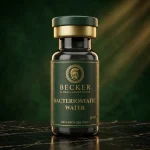
A 99% pure peptide can be degraded to uselessness in an afternoon. Lyophilised powder is remarkably stable; the moment it enters solution, hydrolysis, oxidation and aggregation begin competing for your molecule.
Bring the vial to room temperature before opening. Cold glass pulls atmospheric moisture into the powder, and that moisture is the starting point for hydrolytic degradation of the peptide backbone.
Add sterile diluent slowly down the inner wall of the vial rather than directly onto the cake. Never shake: mechanical shear promotes aggregation, particularly in longer sequences and in anything with a hydrophobic stretch. Swirl gently until the solution is completely clear.
Refrigerate reconstituted material at 2 to 8°C, protected from light, and aliquot if you expect repeated access. Freeze-thaw cycling is the single largest avoidable source of potency loss in a research setting.
Record the reconstitution date on the vial. Most sequences hold for several weeks refrigerated, but stability is sequence-specific and should be read from the product page rather than assumed.
For laboratory research use only. This article is general information and is not medical advice.